IN 5 DAYS🔥
Guru Arjan Dev Ji Shaheedi PurabTuesday, June 16, 2026
Parkash Purab — Guru Granth Sahib Ji82 days
Full calendar →

⚔️ Courage Has Many Faces

Lions of
the Khalsa

Warriors, scholars, martyrs, and mothers. They gave everything — comfort, freedom, and life — for faith, for justice, and for those who could not protect themselves.

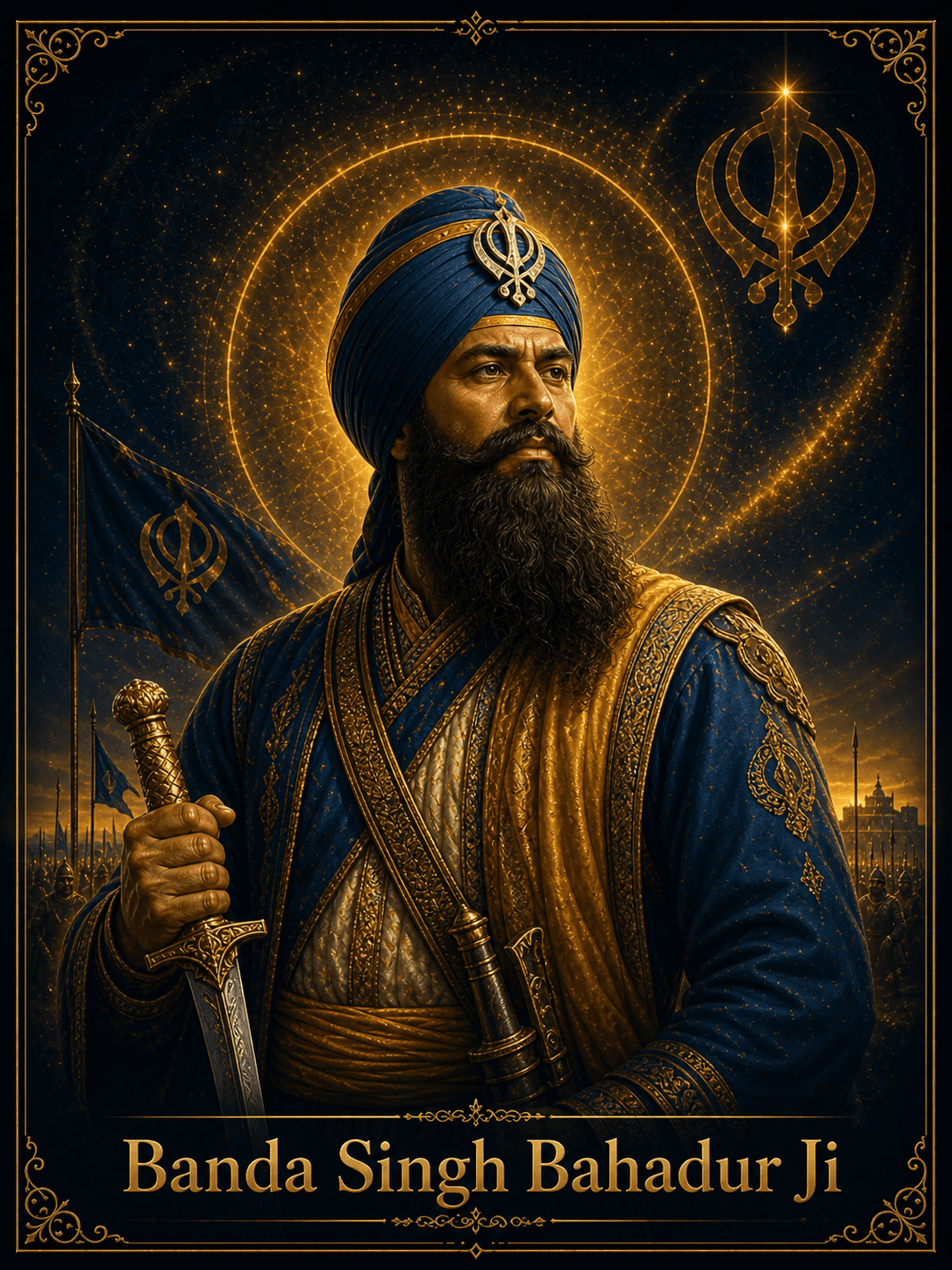
Baba Banda Singh Bahadur Ji
Warrior

Baba Banda Singh Bahadur Ji

The First Sikh Commander

Banda Singh Bahadur was the greatest Sikh military commander after the Gurus. Born as Lachhman Das, a Hindu ascetic, he was transformed by Guru Gobind Singh Ji into a fearless warrior of justice. He led the Sikh forces to win back Punjab from the Mughals, gave land to farmers, and established the first Sikh-governed state.

Heroic Act

He captured Sirhind, avenged the Sahibzadas, freed Punjab's farmers, and died under the most extreme torture without surrendering his faith or his Sikhi.

Lesson

True strength is not just physical. Banda Singh Bahadur faced death smiling because his faith was stronger than any torture. Justice and courage, backed by faith, can change the world.

1670 – 1716
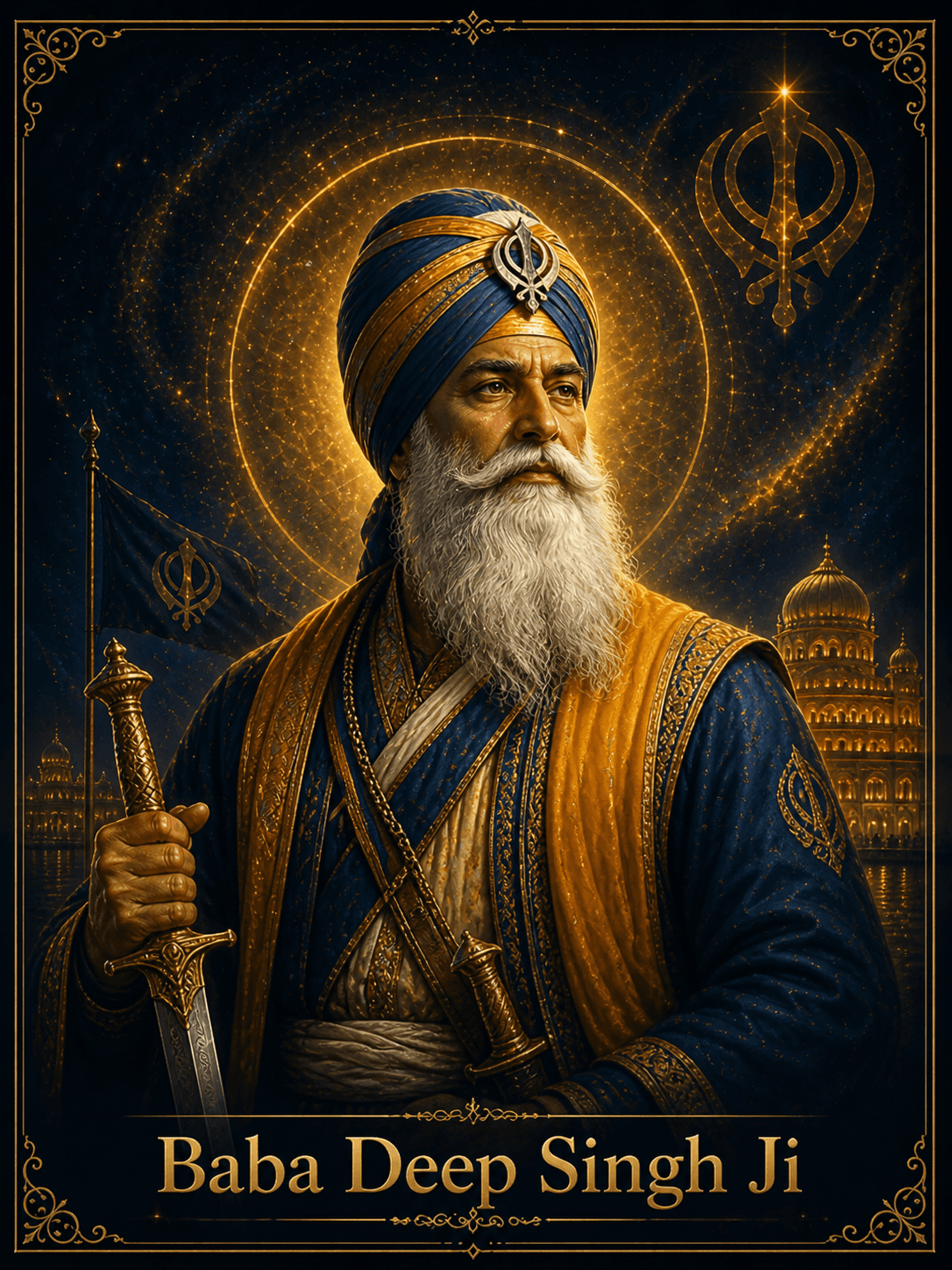
Baba Deep Singh Ji Shaheed
Warrior-Scholar

Baba Deep Singh Ji Shaheed

The Martyr Who Fought On

Baba Deep Singh Ji was one of the most legendary Sikh warriors and scholars. He is famous for a story of incredible devotion: when his head was cut off in battle as he fought to reach Harmandir Sahib (the Golden Temple), he is said to have held up his own head in one hand and his sword in the other, continuing to fight until he reached the sacred site.

Heroic Act

At age 75, with his head cut off in battle, he is said to have carried his own head to the sacred Harmandir Sahib, fulfilling his vow to protect the holy site.

Lesson

A vow made before God must be kept — even at the ultimate cost. Baba Deep Singh Ji shows that devotion transcends the limits of the body.

1682 – 1757

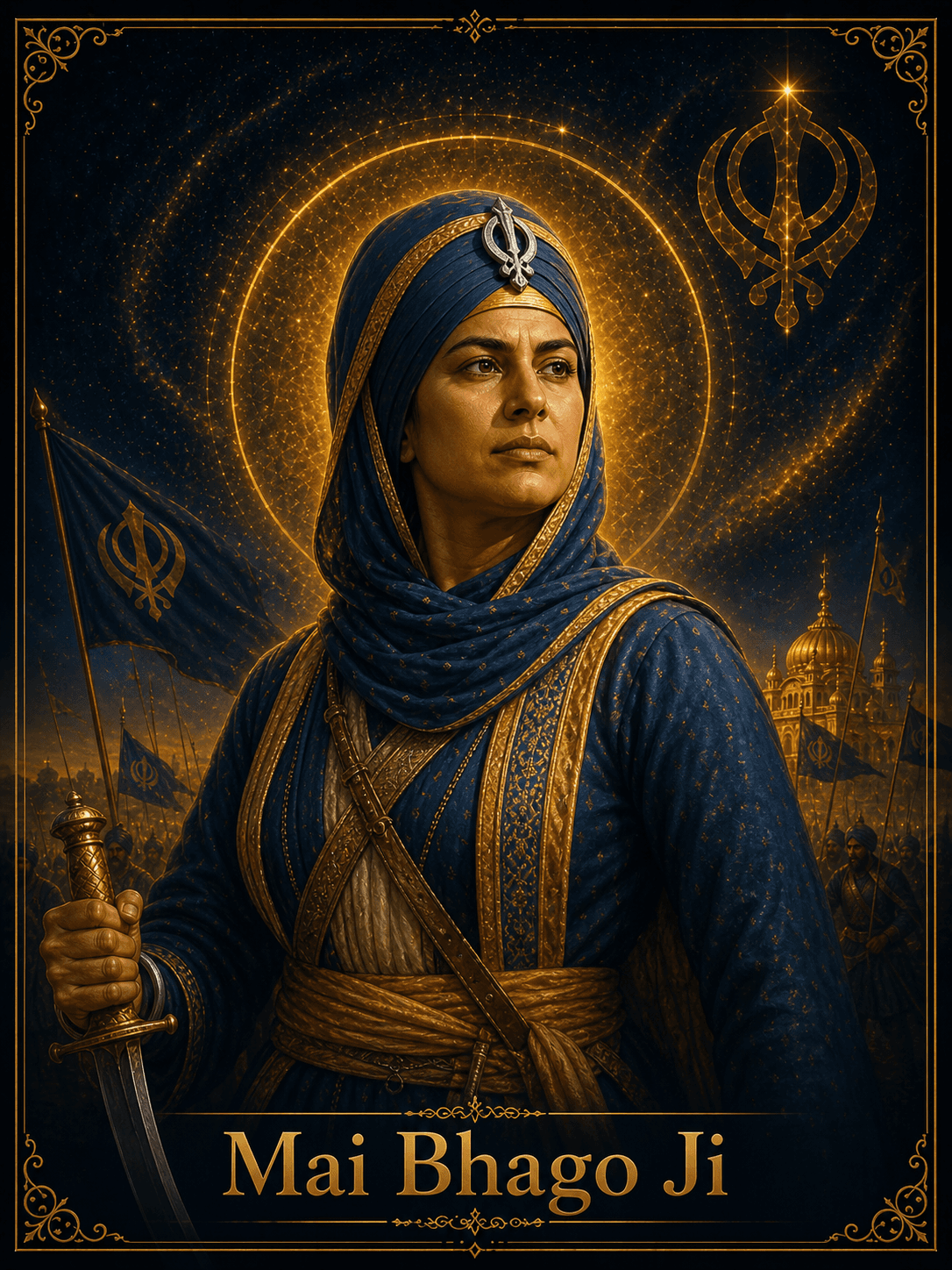
Mai Bhago Ji
Woman Warrior

Mai Bhago Ji

The Warrior Woman of Muktsar

Mai Bhago Ji was a Sikh woman warrior — the only woman to fight alongside Guru Gobind Singh Ji on the battlefield. She is one of the greatest heroines in Sikh history, proving that courage and faith know no gender.

Heroic Act

She shamed forty deserters back to their faith, led them into battle, fought alongside them, survived alone, and served as Guru Gobind Singh Ji's personal guard for the rest of her life.

Lesson

Courage has no gender. Mai Bhago showed that a woman of faith can lead, fight, and inspire entire armies. Her story reminds us that we must never abandon our Guru, our community, or our principles.

c. 1680 – after 1705

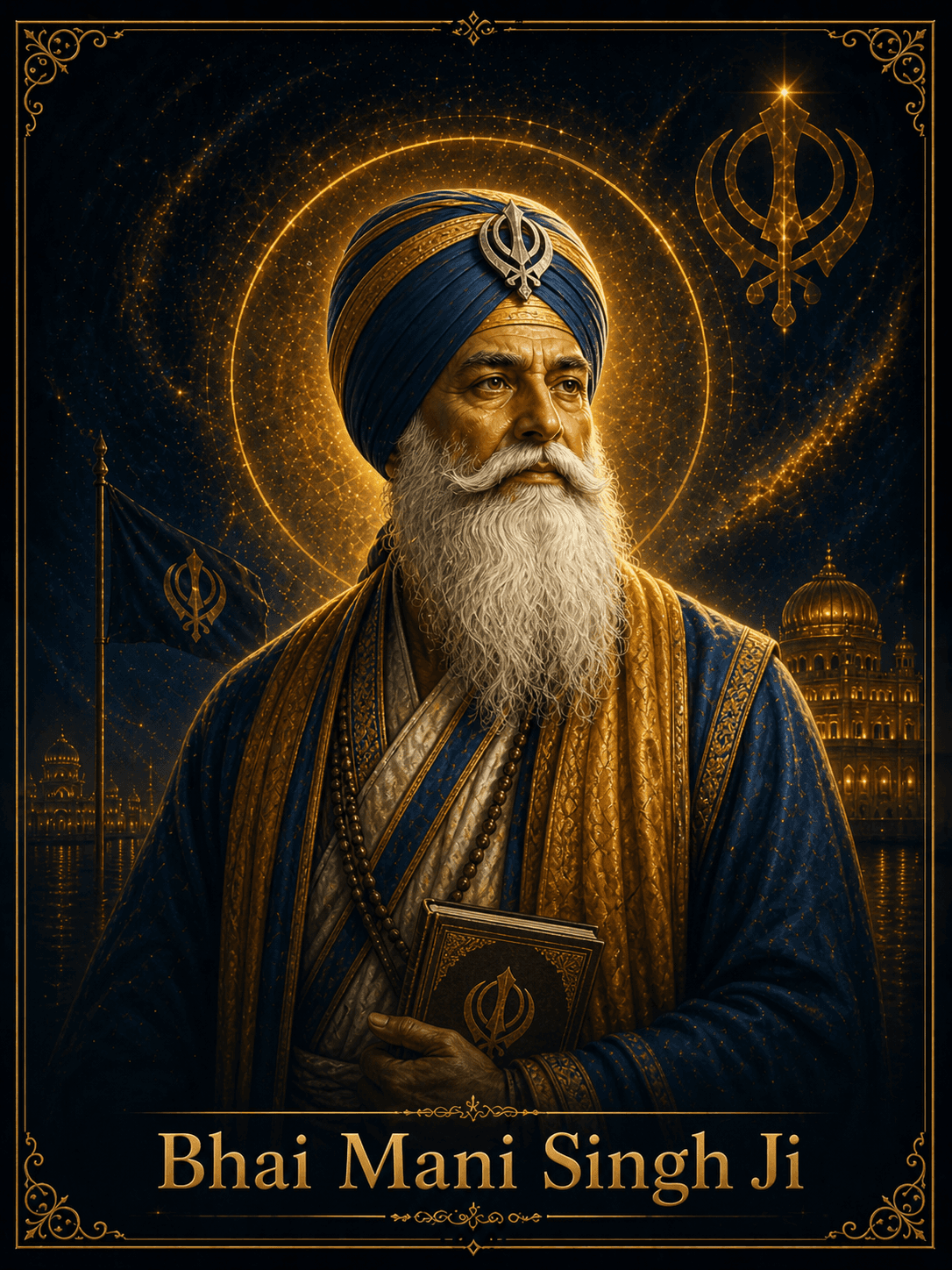
Bhai Mani Singh Ji Shaheed
Scholar

Bhai Mani Singh Ji Shaheed

The Scholar-Martyr

Bhai Mani Singh Ji was one of the greatest scholars in Sikh history. He was the personal secretary of Guru Gobind Singh Ji, wrote out the final version of the Guru Granth Sahib Ji by hand, and was martyred in the most brutal manner — having his body cut joint by joint — rather than pay an unjust tax or betray his faith.

Heroic Act

He preserved the sacred texts of Sikhism and was martyred joint by joint rather than betray his faith or pay an unjust demand.

Lesson

Knowledge is a sacred trust. The pen and the sword can both serve God's truth. Bhai Mani Singh Ji shows that scholars can be just as brave as warriors — and that the written word of God is worth dying for.

c. 1644 – 1737

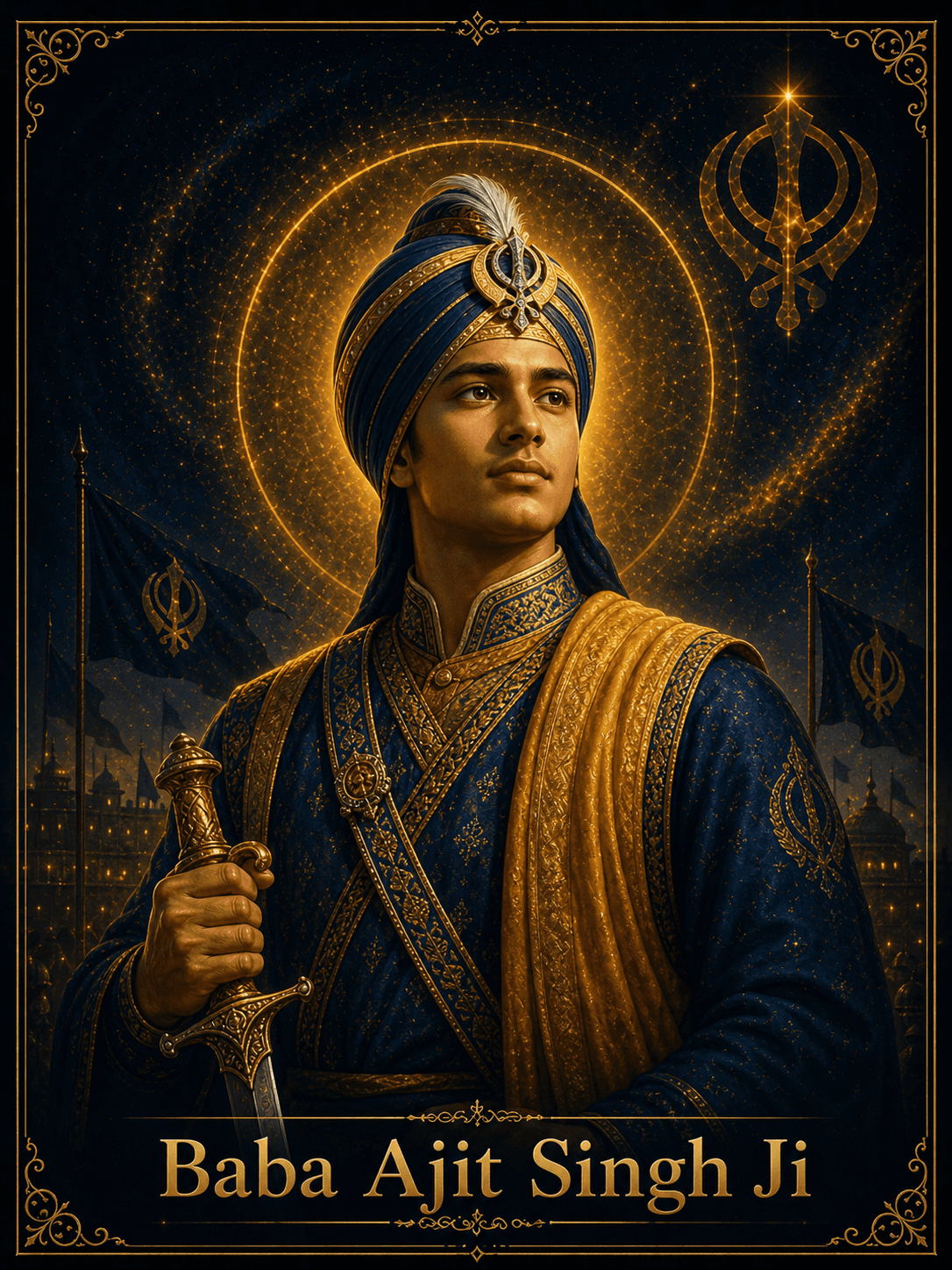
Sahibzada Ajit Singh Ji
Sahibzada

Sahibzada Ajit Singh Ji

The Elder Son Who Led the Charge

Sahibzada Ajit Singh Ji was the eldest son of Guru Gobind Singh Ji, martyred at the age of 17 in the Battle of Chamkaur. He asked permission to lead the charge against a Mughal army of hundreds of thousands — and fought with such courage that his father watched from the fort with tears of pride.

Heroic Act

At 17, he stepped forward to face hundreds of thousands of enemy soldiers, asked his father's blessing, fought with complete courage, and was martyred without retreat.

Lesson

True bravery is not the absence of fear — it is choosing to do what is right despite the fear. At 17, Ajit Singh Ji showed a courage that most adults never find.

1687 – 1704

Sahibzada

Sahibzada Zorawar Singh & Fateh Singh Ji

The Two Young Sons — Bricked Alive

Sahibzada Zorawar Singh Ji (age 8) and Sahibzada Fateh Singh Ji (age 5) were the two youngest sons of Guru Gobind Singh Ji. Separated from their father during the evacuation of Anandpur Sahib, they were captured by the Mughal governor of Sirhind, Wazir Khan, who offered them wealth and power if they would convert to Islam. They refused — and were bricked alive in a wall.

Heroic Act

At ages 8 and 5, they refused to trade their faith for their lives, stood with dignity before a powerful governor, and were martyred with God's Name on their lips.

Lesson

Sikhi belongs to every Sikh — young or old. The sacrifice of the Sahibzadas shows that faith is not something forced onto children but a living fire that can burn in the smallest heart. Guru Gobind Singh Ji said that to lose his four sons was no great loss — as long as the Khalsa Panth continued.

Zorawar: 1696–1704 · Fateh: 1699–1704

🌟
Martyr

Bhai Taru Singh Ji Shaheed

Who Gave His Scalp Instead of His Faith

Bhai Taru Singh Ji was a young Sikh farmer known for his deep faith, generosity, and the support he gave to Sikh fighters hiding from the Mughals. When arrested, the Mughal governor Zakariya Khan demanded he cut his hair and convert to Islam or face death. Bhai Taru Singh offered something extraordinary in response.

Heroic Act

He refused to cut his hair even under the threat of the most extreme torture — having his scalp removed. He offered his scalp rather than the dignity of his Kesh (uncut hair).

Lesson

The 5 Ks — the symbols given by Guru Gobind Singh Ji — are not just religious items. They are promises. Bhai Taru Singh Ji taught that a Sikh keeps that promise even at the cost of everything.

1720 – 1745

“They did not fear death. They feared an unlived life.”

The eternal spirit of the Khalsa